
Exploring Structural Integration in Portland, Maine: Rolfing, ATSI, and What to Expect
If you've been searching for Rolfing in Portland, Maine, you've probably already heard that it can do remarkable things — relieve chronic pain, improve posture, release old injuries that haven't responded to anything else. That reputation is well-earned.
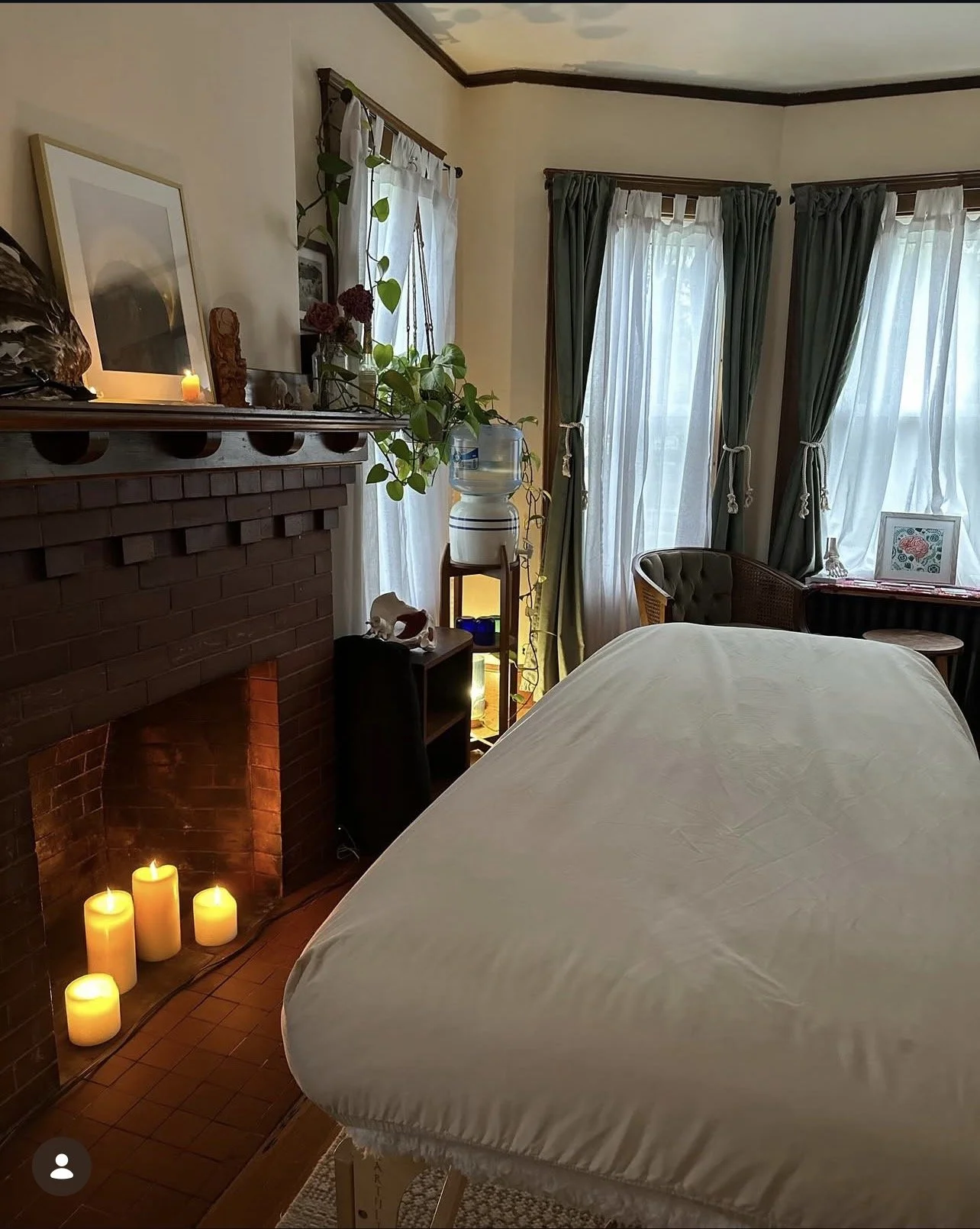
What I offer here at K'intu Healing Arts is something closely related: Anatomy Trains Structural Integration, or ATSI. It grew directly out of the Rolfing tradition, and understanding the relationship between the two might help you figure out which approach is the right fit for you.
First: What Is Rolfing?
Rolfing was developed by Dr. Ida Rolf in the 1960s and 70s. A biochemist by training, Dr. Rolf recognized that chronic pain, poor posture, and reduced mobility often have less to do with individual muscles and more to do with the fascia — the web of connective tissue that surrounds and connects everything in the body.
Her insight was profound: when fascia becomes restricted — through injury, repetitive movement, stress, or old trauma — it creates patterns of tension that spread through the whole body. The neck pain you feel might originate from tension in your hips. The back ache might be your body compensating for something happening in your feet.
Dr. Rolf developed a 10-session series to systematically address these patterns, working from the outer layers of the body inward. Clients began reporting remarkable changes: they stood taller, moved with greater ease, experienced relief from chronic pain they'd carried for years, and sometimes released emotions they hadn't expected.
So What Is ATSI — And How Is It Different?
Anatomy Trains Structural Integration was developed by Tom Myers, who trained directly under Ida Rolf in the early 1970s and went on to teach at the Rolf Institute. Over decades of practice and research, Myers identified something important: the fascia doesn't just exist around individual muscles — it runs in continuous lines throughout the entire body.
He named these pathways the Anatomy Trains Myofascial Meridians. Think of them as fascial highways that connect your foot to your skull, your jaw to your pelvis, your front body to your back. When tension builds anywhere along one of these lines, it travels — and that's often why pain shows up somewhere seemingly unrelated to the original injury.
Myers expanded Dr. Rolf's original series into the ATSI 12 series, with each session dedicated to one of these myofascial lines. This means every session has a clear purpose in the larger map of your body — releasing the right fascial pathway at the right time, building toward whole-body integration.
In short: Rolfing is the original, groundbreaking method. ATSI is its evolution — built on the same foundation, but with a more detailed anatomical map and two additional sessions to go deeper.
What Does an ATSI Series Actually Feel Like?
Each session begins with a body reading — I observe how you stand, how you breathe, how you carry yourself and how you walk. Your posture tells a story, and I value taking the time to listen.
The hands-on work is slow and intentional. This isn't a massage meant to temporarily relax tight muscles — it's working with the connective tissue to create lasting change. Some moments feel deeply releasing; others are subtler, more like a quiet reorganization happening beneath the surface.
Clients often notice changes that surprise them: breathing more freely, sleeping better, feeling more grounded in their body, moving with a lightness they'd forgotten was possible. And yes — chronic pain that has been present for years often begins to shift in ways other treatments haven't been able to reach.
Who Benefits From This Work?
ATSI can be especially helpful if you experience any of the following:
• Chronic back, neck, or shoulder pain
• Scoliosis or postural imbalances
• TMJ dysfunction or jaw pain
• Headaches or migraines
• Digestive tension or gut issues
• Whiplash or old injuries that never fully resolved
• A sense of being disconnected from your body
• A desire for deeper, more lasting change than massage alone provides
This work also resonates deeply with people who are curious about their own bodies — who want to understand why they hold tension where they do, and what it means to truly inhabit themselves with ease.
Do I Have to Commit to All 12 Sessions?
No — and I'd never want you to commit to something before you've had a chance to experience it. I offer a 3-session introductory series that addresses the outer sleeve of the body and gives you a real sense of what this work can do. Many people choose to continue into the full 12-series after those first three sessions. Others find the shorter series gives them exactly what they needed.
Ready to Experience It for Yourself?
If you've been searching for Rolfing in Portland, Maine — or if you've tried other treatments and are ready for something that works at a deeper level — I'd love to work with you.
K'intu Healing Arts is located at 602 Brighton Ave in Portland, Maine. You can learn more about the ATSI series and book a session at kintuhealingarts.com, or reach me at kat@kintuhealingarts.com or 207.693.5181.
Your body has been telling its story for a long time. This work helps you finally hear it — and change it.