
The Body Remembers: How Times of Crisis Birth New Healing
Last year, two Pilates-aficionado friends and I sat down to watch Mother of Fascia, a documentary on the life of Ida Rolf. I was already familiar with the broad strokes of her story — born in 1896, PhD in Biochemistry from Columbia in 1920, research associate at the Rockefeller Institute through the early 1930s, and then the long, quiet decades in which she began developing the method that would become Structural Integration, later coined Rolfing.
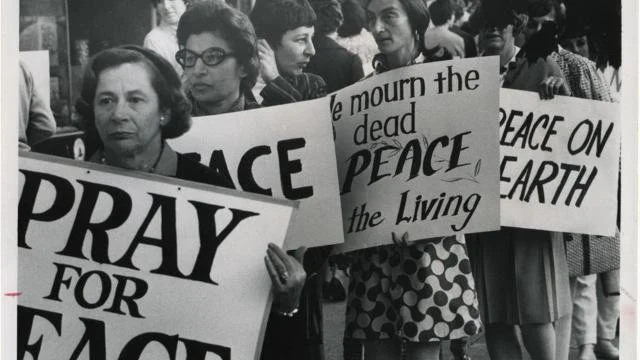
But watching it again, something clicked into place that hadn't before: the backdrop. World War I. The Great Depression. World War II. The Cold War. The Korean War. Vietnam.
She started her career as a scientist. But as the world continued to intensify in battle and disconnection, she moved toward the body. Along the way she studied osteopathy, homeopathy, yoga, and Korzybski's general semantics — drawing from every available system, unbothered by the fact that no institution had prepared her for where her curiosity was leading.
The question that obsessed her was deceptively simple: why does the body hold the shapes it holds? She noticed that people who had suffered — physically, emotionally, through illness, through trauma — carried that suffering in their posture. Not metaphorically. Literally. In the layered fascia, the connective tissue that sheathes every muscle and organ, the body had recorded its history. And those patterns, unchallenged, were running the show — restricting breath, distorting gait, perpetuating pain long after its original cause had passed.
And she wasn't the only one asking questions like this.
When the World Cracks Open
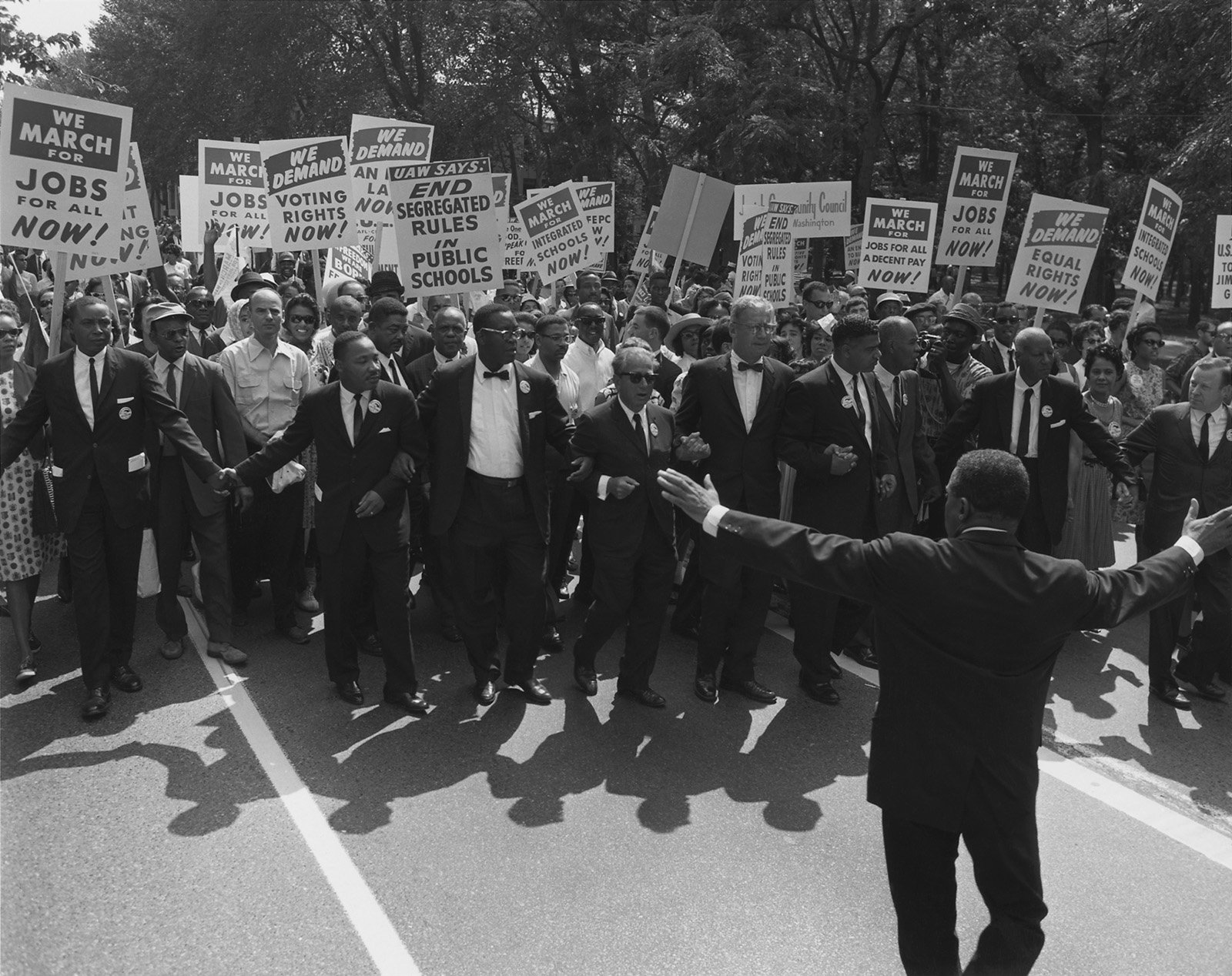
There is a peculiar alchemy that happens when civilizations fracture. When the structures we trusted — governments, economies, social contracts, the orderly march of progress — begin to fail, something else begins to stir. The body, long ignored, starts to speak. Healers appear. New systems emerge. And a cluster of remarkable human beings, shaped by the same turbulence, begin reaching for something that cannot be bombed, segregated, or cancelled: the latent potential inside the living human form.
It is not coincidence that the modalities we now regard as foundational to holistic health — Rolfing, Gestalt therapy, Holotropic Breathwork, somatic psychology — all emerged from roughly the same decades: the 1940s through the early 1970s. These were not peaceful years. They were years of Holocaust, Hiroshima, McCarthyism, assassinations, urban uprisings, and the near-constant hum of nuclear anxiety.

And yet — or rather, because of this — they were years of extraordinary flowering in our understanding of the human psyche and body. When conventional medicine, psychiatry, and religious authority could not account for the scale of suffering they were confronting, new frameworks rushed in.
Fritz Perls developed Gestalt therapy — fierce, present-moment psychological encounter — after fleeing Nazi Germany. His philosophy was almost confrontationally simple: lose your mind and come to your senses. Viktor Frankl emerged from Auschwitz to found Logotherapy, the search for meaning as the fundamental human drive, having tested his theory in the most extreme possible laboratory — writing the book that would become Man's Search for Meaning in just nine days after liberation. Wilhelm Reich's radical ideas about character armor, the way the psyche's defenses become literally inscribed in the body's musculature, seeded an entire generation of somatic therapists including, in important ways, Ida Rolf herself.
Abraham Maslow, reacting against the reductionism of both Freudian and Behaviorist psychology, proposed something almost heretical for its time: that human beings are not primarily driven by pathology or conditioning, but oriented toward growth, meaning, and self-actualization. His hierarchy of needs and concept of "peak experiences" gave the entire Human Potential Movement its philosophical spine.
These were not people insulated from the century's violence. They were people shaped by it — who passed through its fires and came out the other side convinced the standard answers were not enough.
Esalen and the Question That Changed Everything
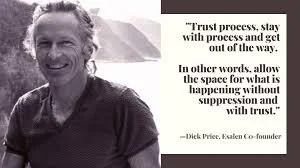
Ida began teaching in earnest in the 1960s, finding her most important home at the Esalen Institute in Big Sur, California, founded in 1962 by Michael Murphy and Dick Price. The timing was not incidental — Esalen opened its doors during the Cuban Missile Crisis, the closest the world had come to nuclear annihilation. There, on the cliffs above the Pacific, among Gestalt therapists and encounter groups and Eastern philosophers and humanistic psychologists, Rolfing found its tribe.
Dick Price's story alone is worth pausing on. He had been forcibly institutionalized and subjected to electroshock therapy against his will — a direct collision with the violence of the mental health system as it existed then. His suffering became the precise instrument of his vision: a space where genuine psychological inquiry could happen without coercion, without the brutality of institutional psychiatry, without the pretense that the existing frameworks were adequate. Esalen was, in many ways, a refuge and a rebellion at once.
My own teachers — Sharon Wheeler and Hugh Milne — were fortunate enough to experience Esalen in those early, electric years. Those gathered on that clifftop were animated by a single question: What is the human being actually capable of?
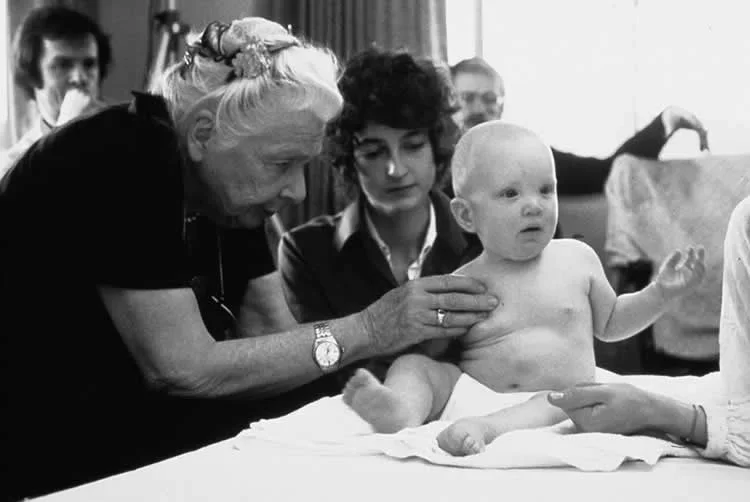
Ida Rolf, a grandmother in her late sixties by the time she arrived, became one of the most galvanizing figures in that world. A scientist who had followed curiosity into territory that no institution had prepared her for, dismissed for decades, she had simply kept working. Kept refining. Kept putting her hands on people and asking what she found. The dismissal, in some sense, had freed her — from having to please institutions that had already rejected her, from needing approval she was never going to receive anyway. She worked until the end of her life, dying in 1979 at the age of 83.
What Instability Makes Possible
That question — what is the human being actually capable of? — has never stopped being urgent. If anything, it feels more urgent now.
We find ourselves in our own era of fracture. The certainties that organized the world of our parents — stable institutions, trusted authority, linear progress — are eroding in ways that are increasingly hard to ignore. The anxiety is real. The disorientation is real.
But the tradition of Ida Rolf — and the whole strange, brave company of Esalen — offers a different invitation. What if the instability itself is the doorway? What if crisis is not the obstacle to growth but the very condition under which the deepest growth becomes possible?
The fascia does not release when it is comfortable. It releases under sustained, skillful pressure — when it is asked, firmly and with care, to let go of a pattern it has been holding for years. This is not metaphor. It is Rolf's actual finding, in the tissue of actual bodies, across decades of work. The structure you were organized around is not the structure you are stuck with. On the other side of the unwinding, something more naturally aligned is waiting.
That is what this work is about. That is why, in times like these, I keep showing up to the table.
If you've been feeling the weight of the world in your body lately — you're not imagining it. Come in.